Imagine walking up to a storefront only to find the door is too heavy to pull open or the stairs are the only way in. Most people would agree that that is a bad business move. Yet, in the digital world, we see these kinds of barriers every day. When a website is built without accessibility in mind, it effectively shuts out a massive portion of the population.
Your website should be the most inclusive element of your business. As we move through 2026, web accessibility represents a fundamental brand value and a legal expectation in the modern marketplace. To stay ahead, businesses must understand the latest evolution in digital standards: WCAG 2.2.
What Is WCAG 2.2?
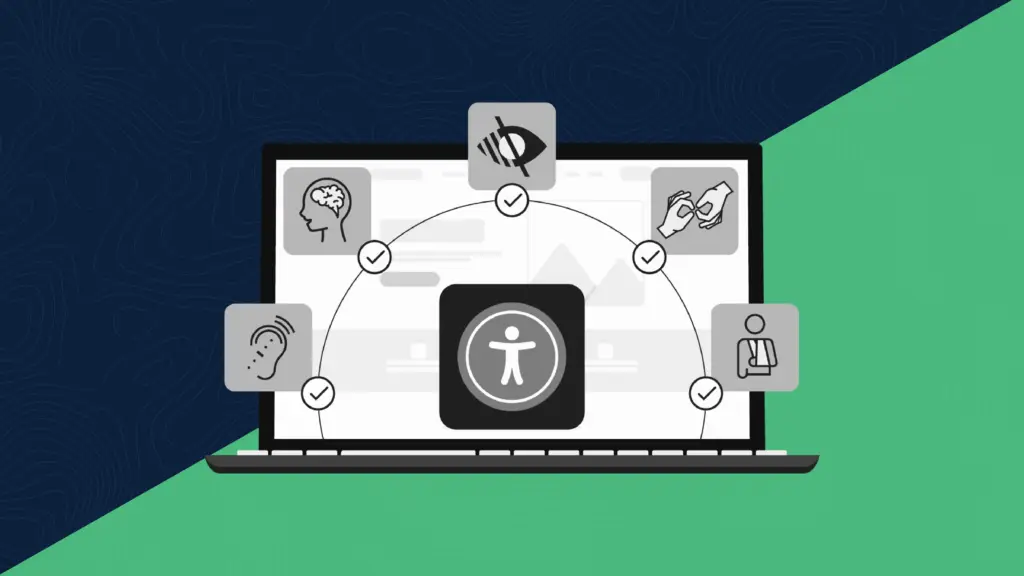
The Web Content Accessibility Guidelines (WCAG) are the international standards that define how to make web content more accessible to people with disabilities. These include people with visual, auditory, physical, speech, cognitive, and neurological disabilities.
The 2.2 update is the latest set of refinements designed to improve the lives of three specific groups: users with cognitive or learning disabilities, users with low vision, and users with physical disabilities who rely on mobile devices. According to data from the CDC, nearly one in four adults in the United States lives with a disability. If your site isn’t optimized for these standards, you’re essentially ignoring a quarter of your potential market.
Focusing on Mobile and Cognitive Ease
One of the most human elements of WCAG 2.2 is the focus on target size. We’ve all experienced the frustration of trying to click a tiny button on a smartphone only to accidentally click the wrong thing. The new guidelines require buttons and links to have a minimum size and enough space around them to prevent these errors.
The update also introduces better protection for focus appearance. This ensures that people who use keyboards or assistive devices to navigate a site can clearly see exactly where they are on a page. It’s the digital equivalent of a “You Are Here” sign on a map. These small technical changes remove the friction that often prevents a visitor from becoming a customer.
The Business Case for Inclusion
In a previous blog, we discussed how every business website in 2026 needs a foundation of trust and speed. Accessibility is a major part of that foundation. Beyond the moral and legal reasons for being inclusive, there is a strong SEO and revenue case to be made.
Google rewards sites that provide a superior user experience. Many of the requirements for WCAG 2.2, such as clear heading structures and high-contrast colors, overlap with search engine best practices. When you make your site easier for a screen reader to navigate, you’re also making it easier for search engine bots to understand your content.
Furthermore, a site that is easy to use for everyone will naturally have a lower bounce rate and a higher conversion rate. People tend to spend more time and money on platforms that don’t require them to work hard to find what they need.
Opening the Door for the Entire Community
With the internet becoming increasingly crowded with uninspired, automated content, the brands that stand out are the ones that prioritize the human experience. Accessibility is the ultimate sign of respect for your audience. It tells every visitor that you have considered their needs and valued their time.
Designing for accessibility serves both the law and the user experience. It ensures that your brand voice is heard by everyone, not just those with perfect vision or fine motor skills.
If your current website feels like it might be leaving people behind, it is time for a professional audit. At Dogwood Media Solutions, we specialize in bringing sites up to the latest standards to ensure your digital front door is open to everyone. Reach out to us today to see how we can help you build a website that truly connects.